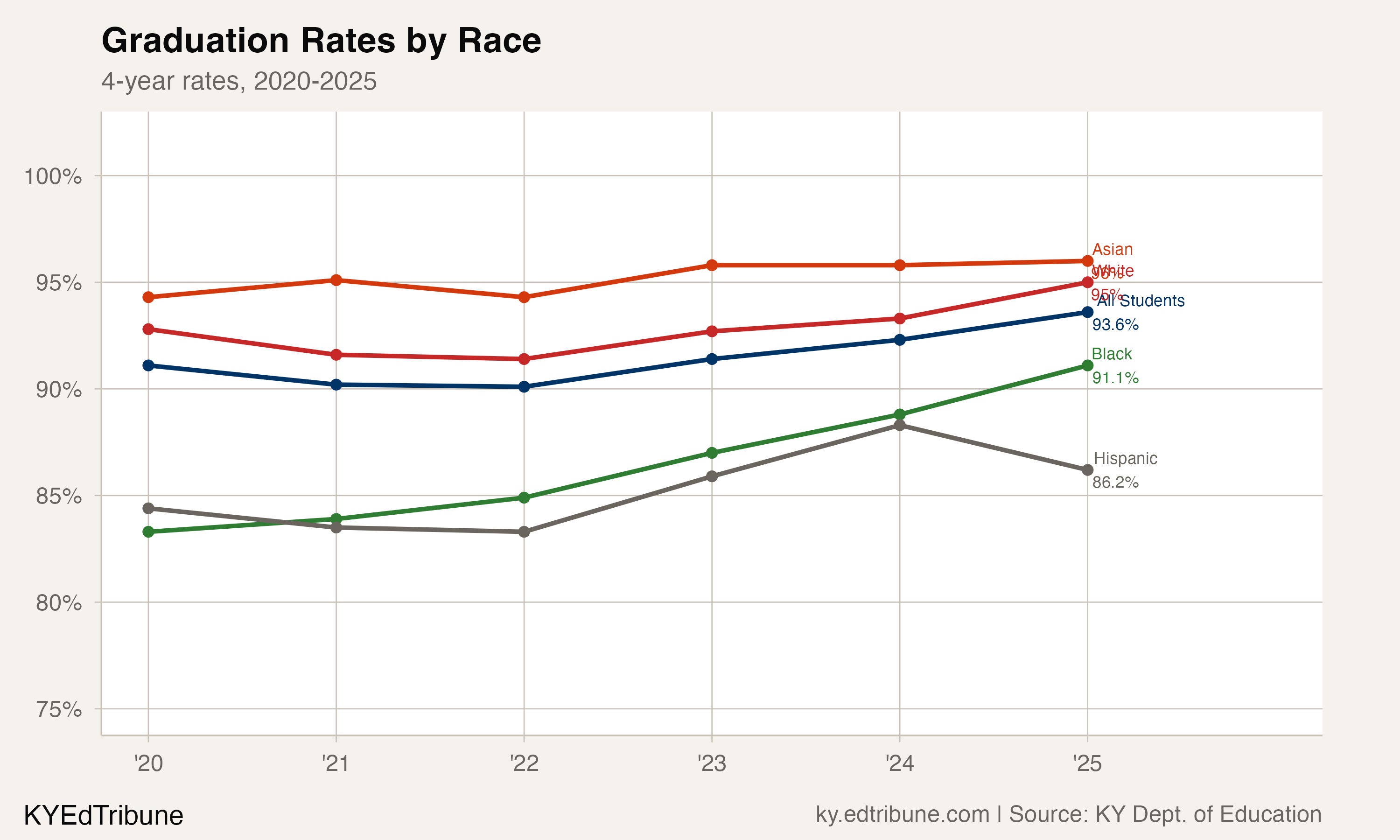
Hispanic Graduation Gains Erased in a Single Year
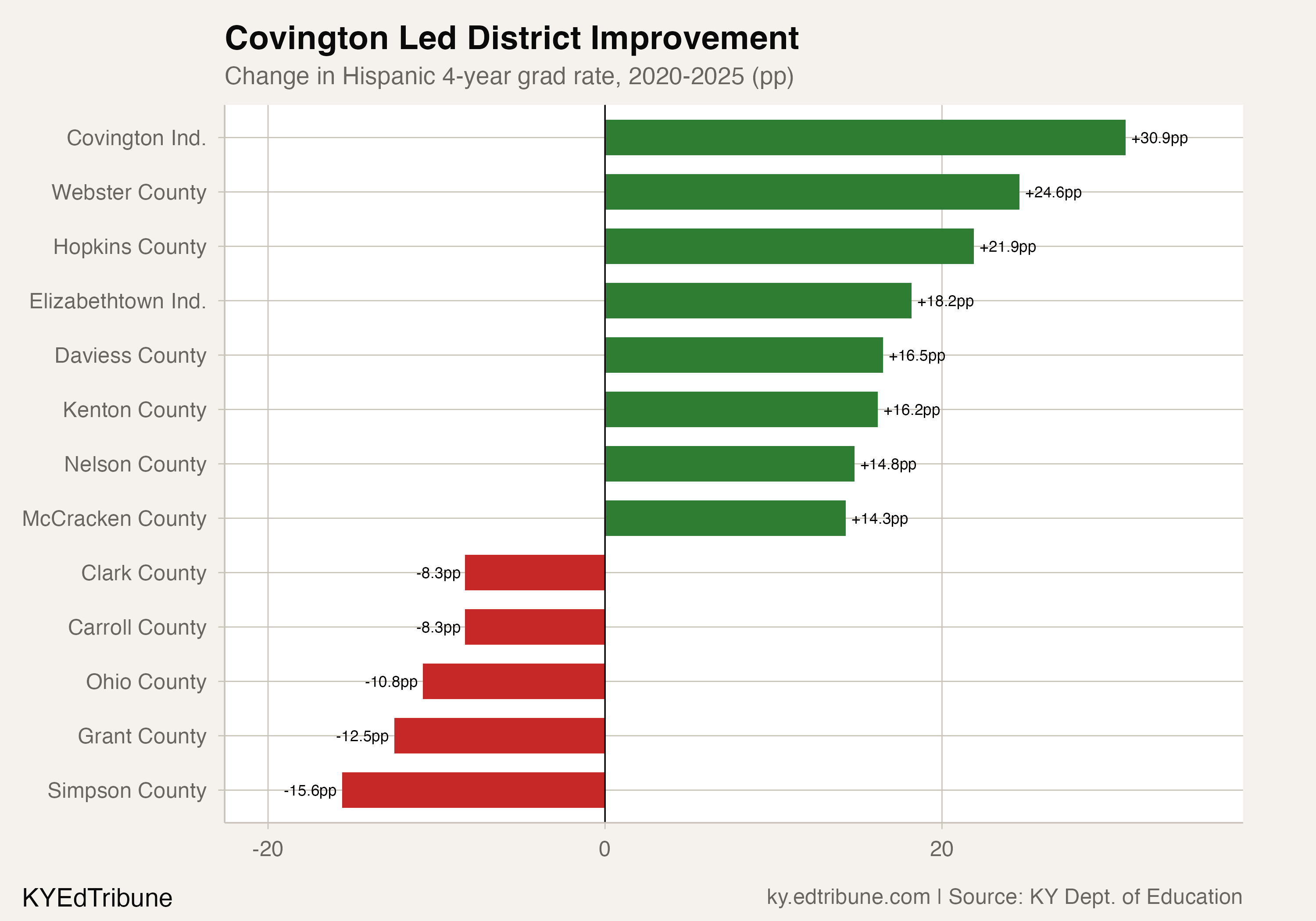
Kentucky's Hispanic graduation rate climbed 5 points from 2022 to 2024, then dropped 2.1 points in 2025, the only racial group to decline while every other improved.
Data-Driven Education Journalism for the Bluegrass State
Education News & Data
Local education reporting from every corner of Kentucky, grounded in Kentucky Department of Education data.
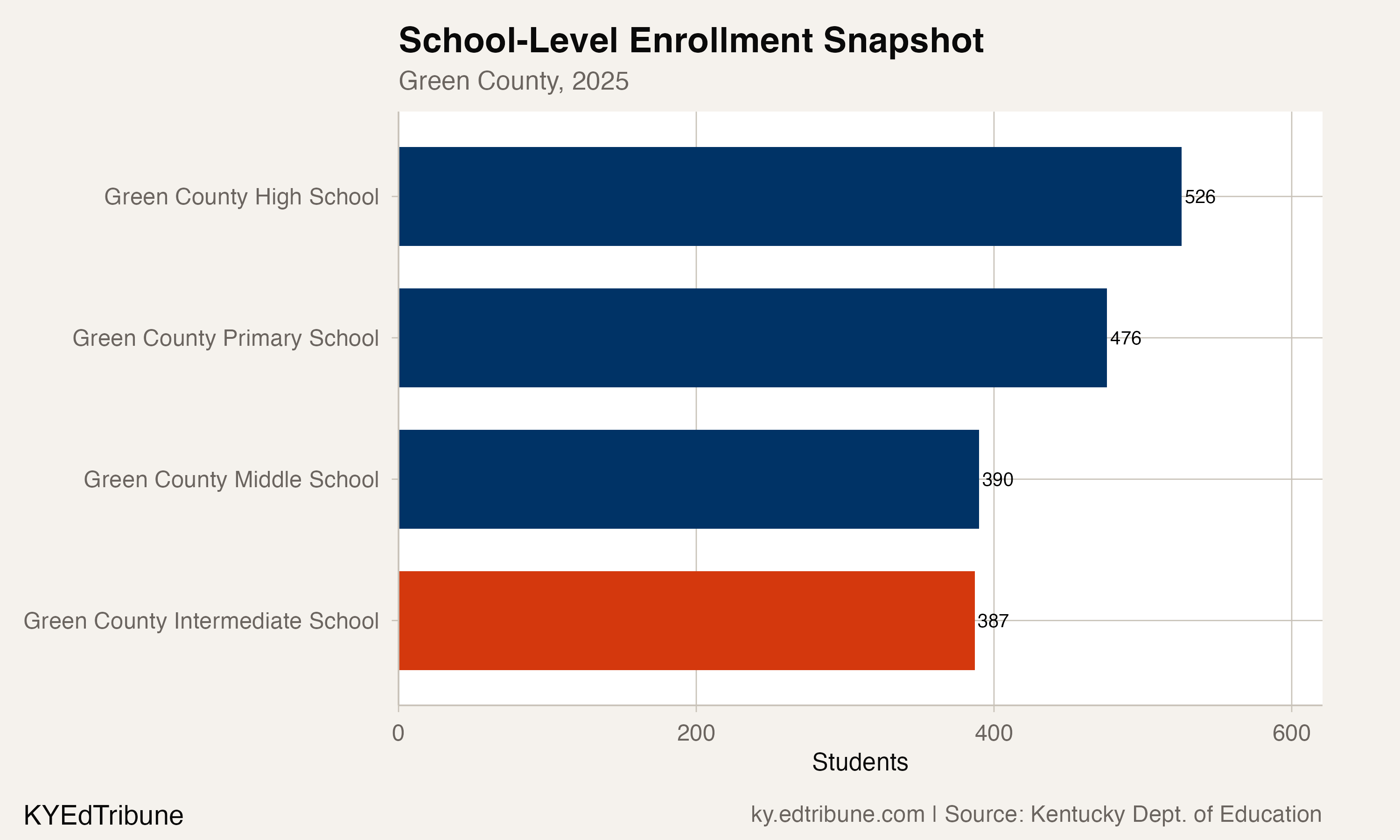
After beginning in Green County as a student teacher, Melissa Collison will lead Green County Intermediate with a focus on academic and emotional support.
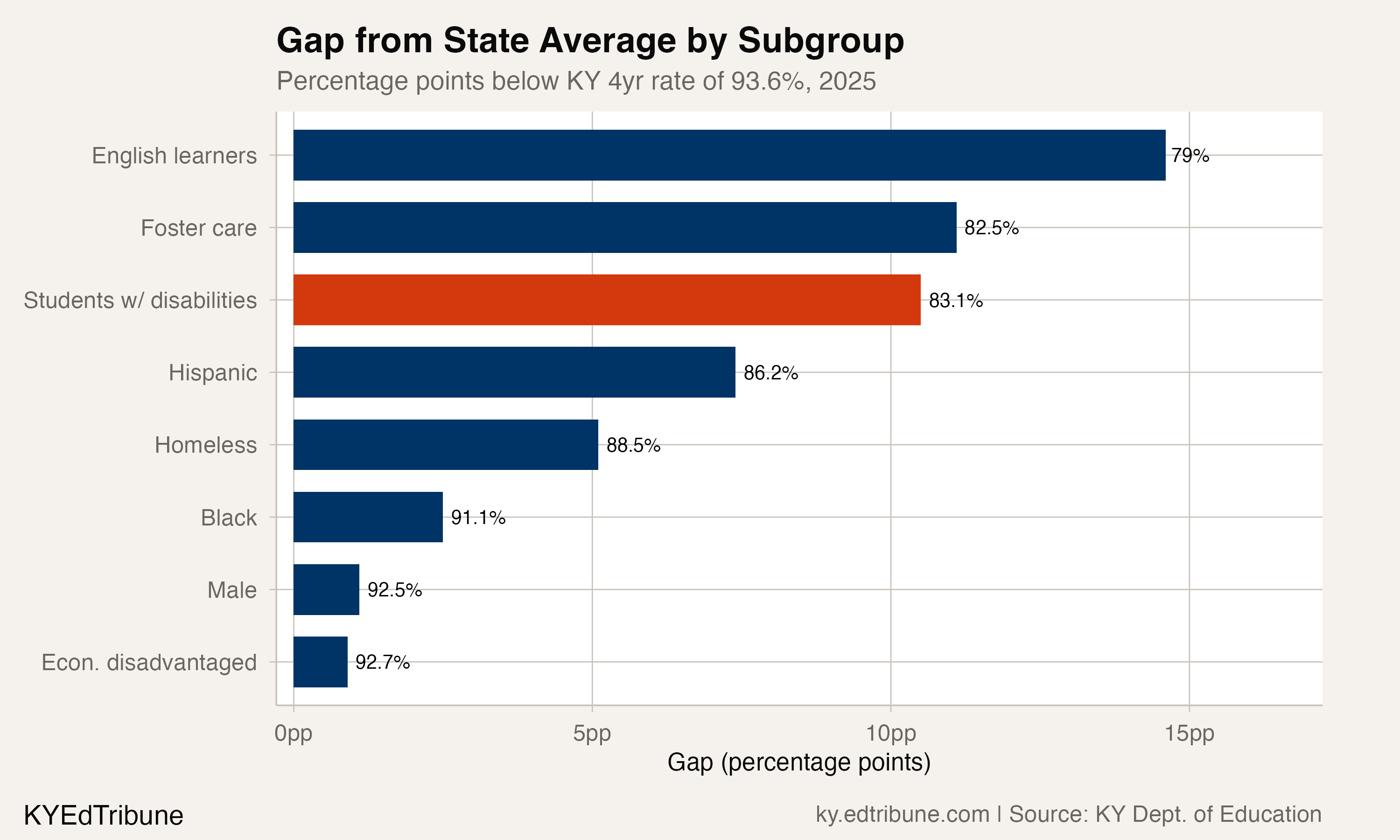
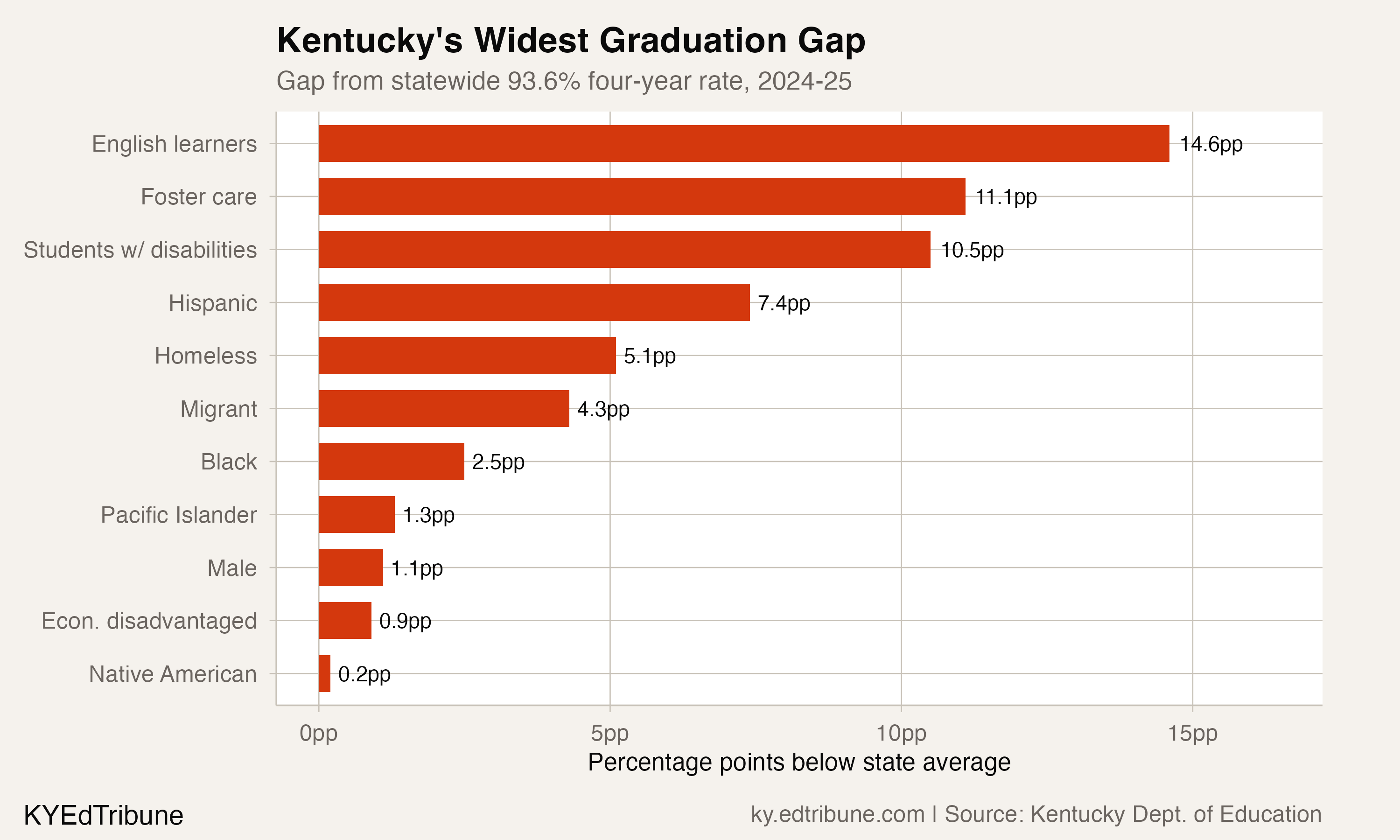
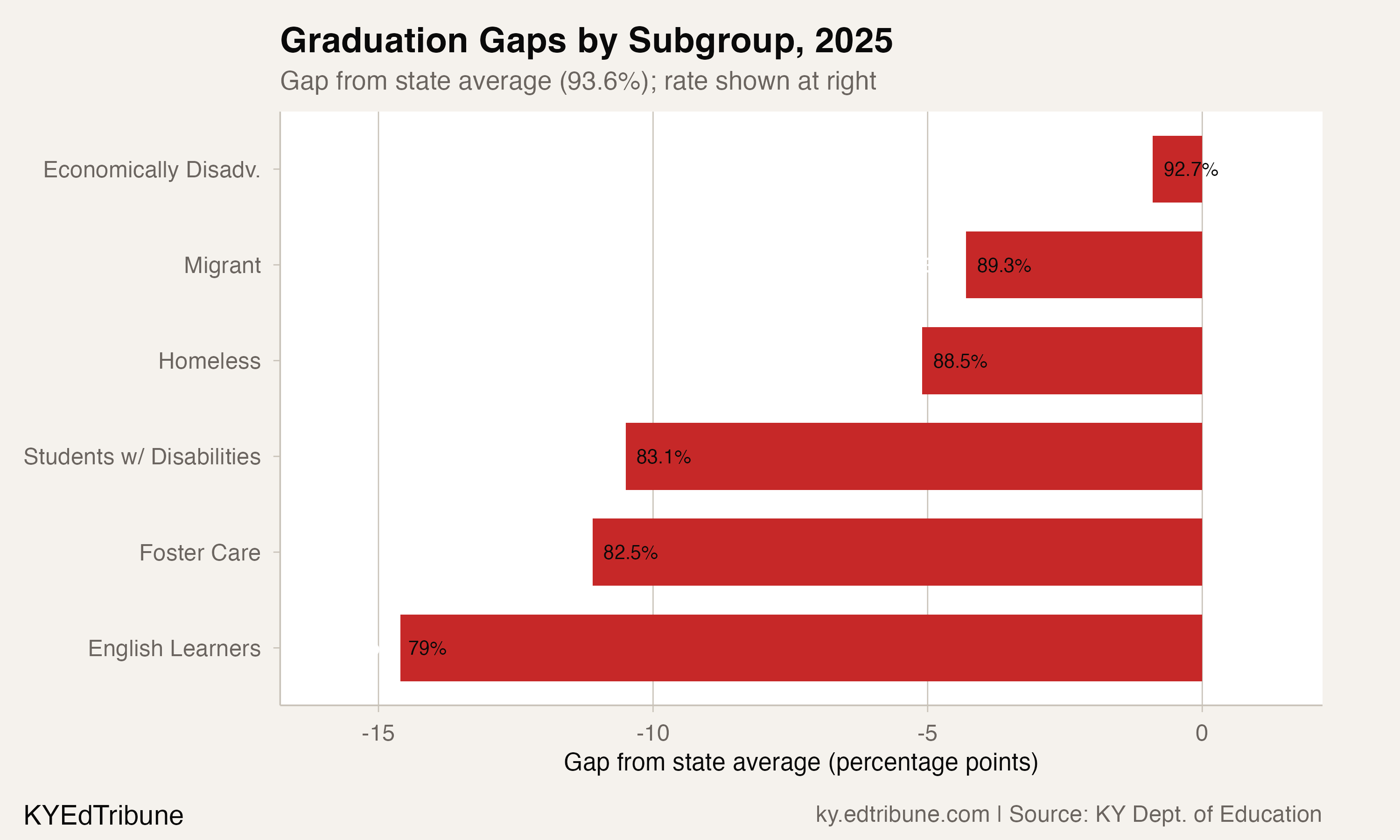
Students with disabilities graduate at 83.1% in Kentucky, a 10.5-point gap from the state rate. Nationally, that gap is 13 points.
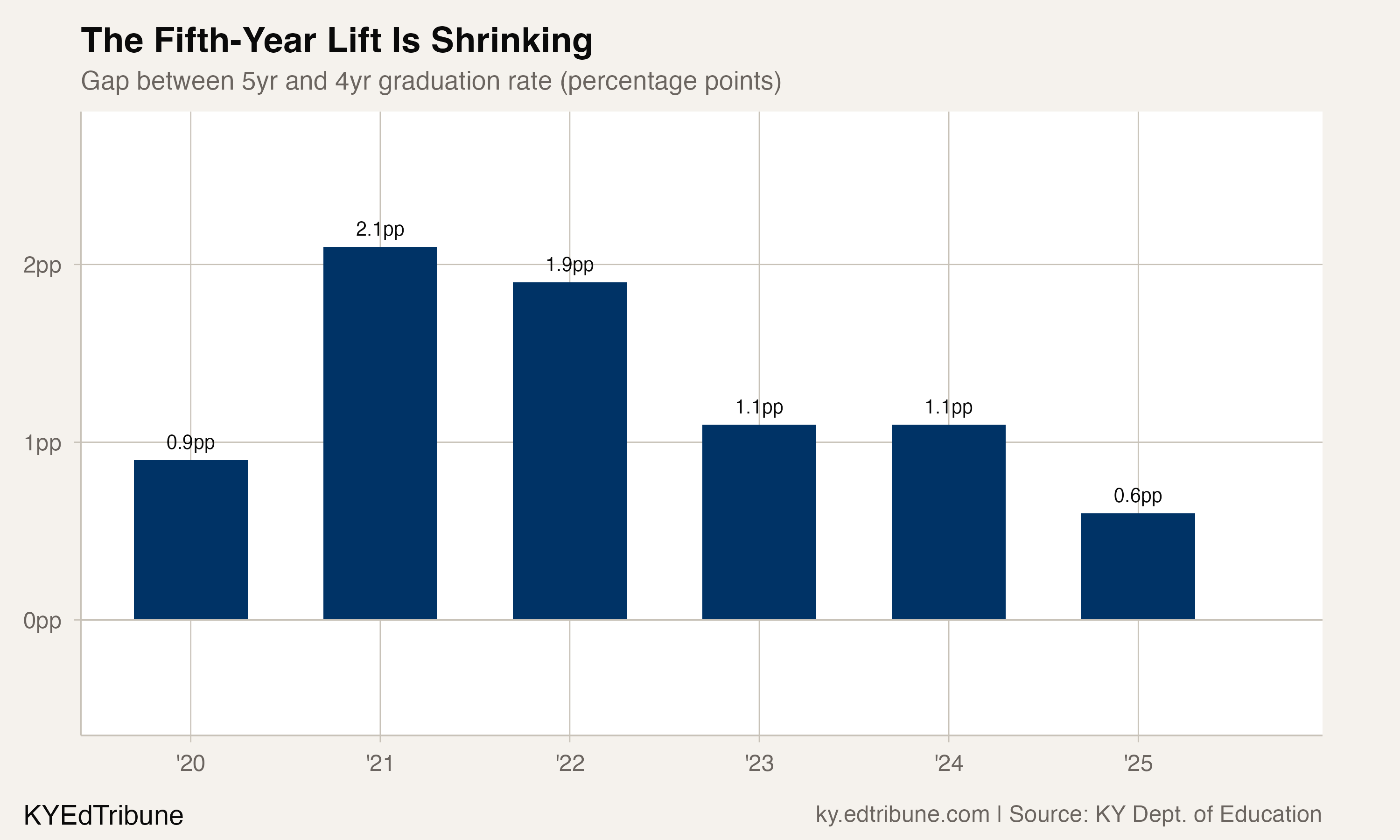
The gap between Kentucky's four-year and five-year graduation rates fell to 0.6 percentage points in 2025, down from 2.1 points during COVID. But English learners still gain nearly 7 points from extra time.
English learners graduate at 79%, 14.6 points below the state average, after a single-year reversal erased four years of progress.
Kentucky's Hispanic graduation rate climbed 5 points from 2022 to 2024, then dropped 2.1 points in 2025, the only racial group to decline while every other improved.
Foster care students in Kentucky graduate at 82.5%, far above the national norm of 50-65%, after a 15-point climb since 2021.
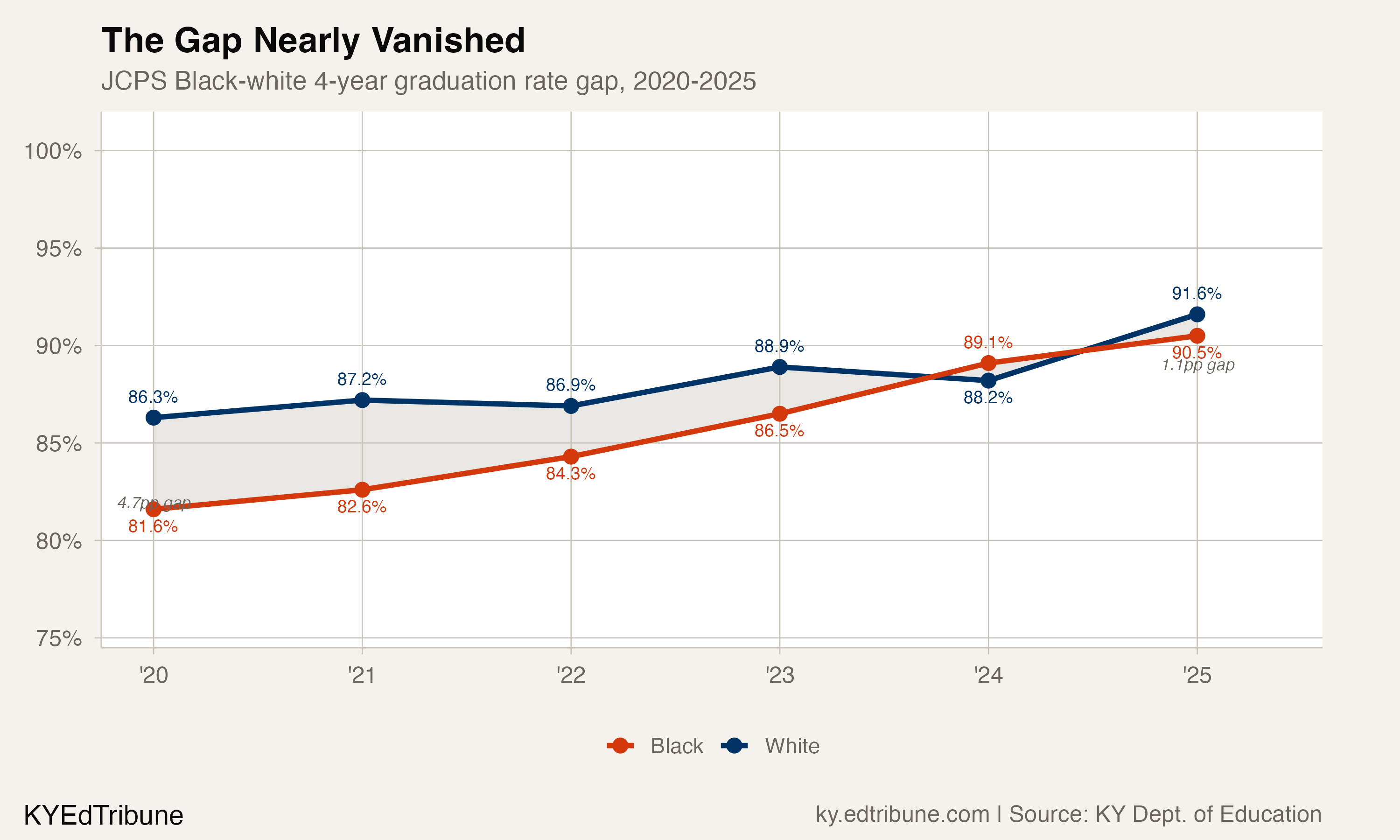
JCPS climbed from 83.7% to 88.7% graduation rate since 2020, with Black students gaining nearly 9 points and briefly surpassing white students in 2024.
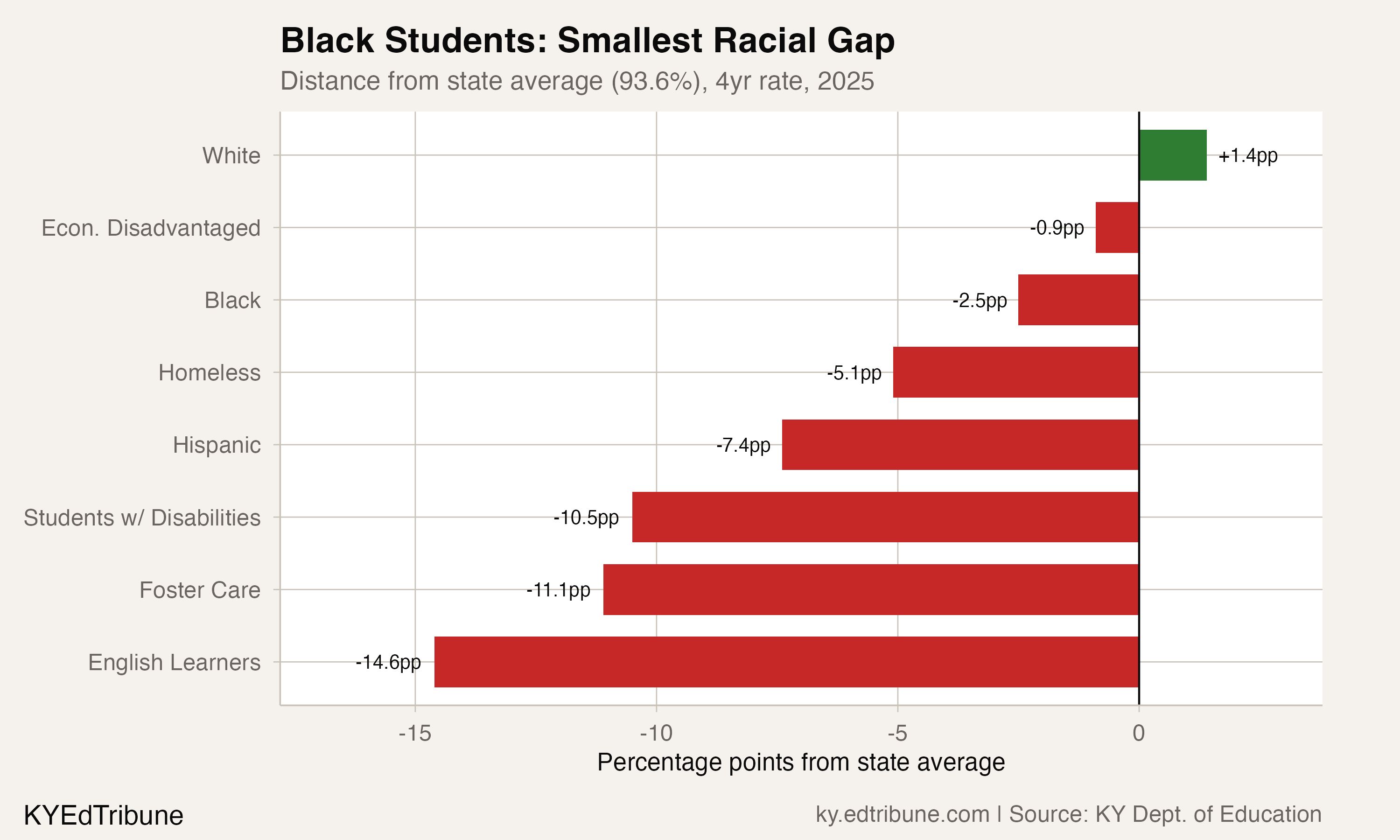
Black students in Kentucky graduate at 91.1%, cutting the gap with white students from 9.5 points to 3.9 since 2020. Both groups are above 90%.
Kentucky's 4-year graduation rate hit 93.6% in 2025, nearly 7 points above the national average, with Black students driving the largest gains.
Hazard Independent dropped from 43.2% to 22.5% chronic absenteeism in two years — the biggest turnaround in Kentucky, in the heart of Appalachia.
Kentucky's 54,712 English learners have a 22.7% chronic absence rate — below the state average. EL enrollment grew 22% while attendance improved.
Bowling Green Independent, a diverse refugee-rich district of 5,229, posted a 12.6% chronic rate — less than half Kentucky's 25% average.
Seven large districts show Black students with lower chronic absenteeism than white students — a reversal of the national pattern that raises questions about what drives racial attendance gaps.
JCPS chronic absenteeism dropped to 33.1% but 32,670 students still miss too much school. The Black-white gap reaches 10.4 points.
Kentucky's 21,832 students who are currently homeless have a 42.7% chronic absence rate. Foster care students barely improved at all.