District Spotlight
Hazard Cut Its Chronic Absence Rate Nearly in Half
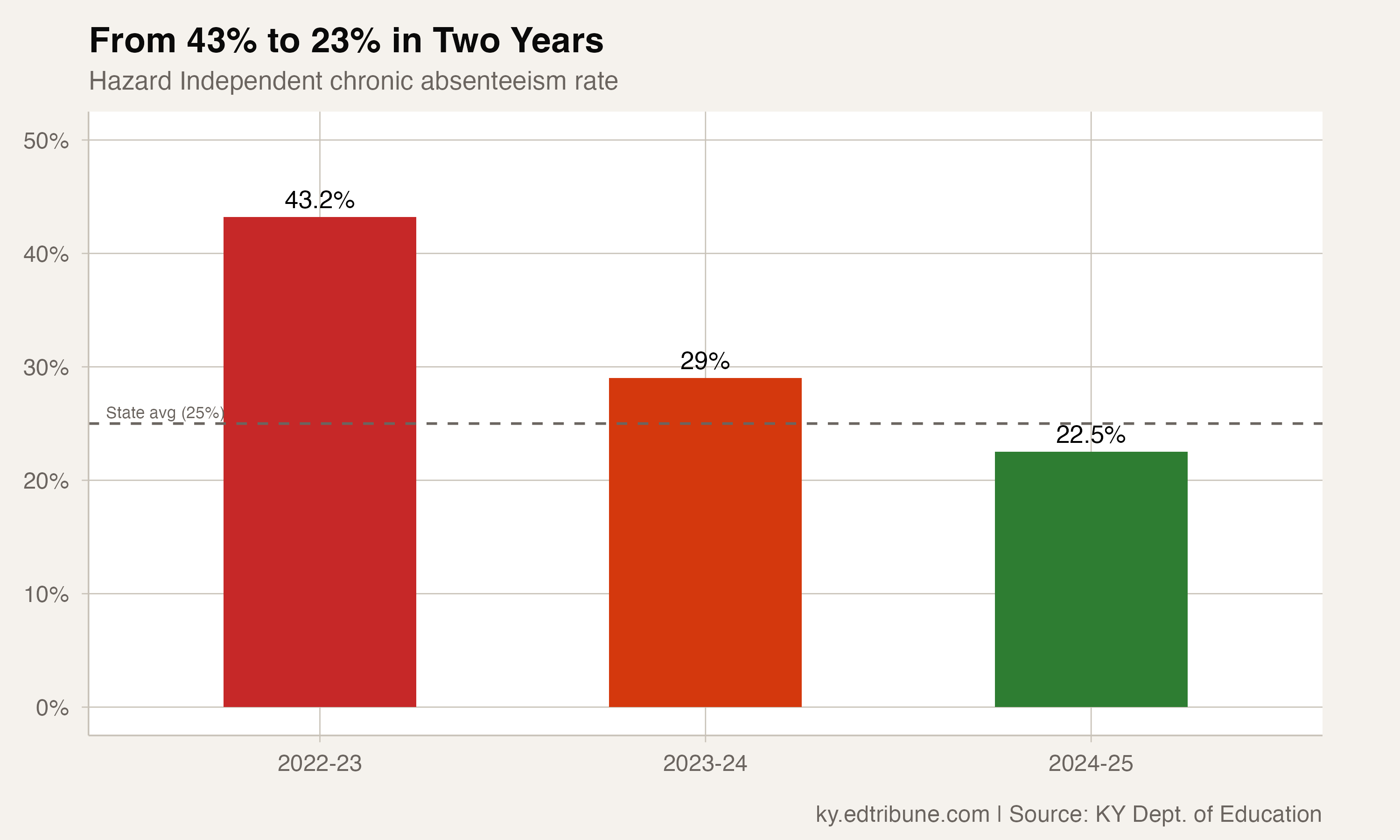
Hazard Independent dropped from 43.2% to 22.5% chronic absenteeism in two years, the largest improvement among Kentucky districts with at least 500 students.
Data-Driven Education Journalism for the Bluegrass State
Page 2 of 2
Hazard Independent dropped from 43.2% to 22.5% chronic absenteeism in two years, the largest improvement among Kentucky districts with at least 500 students.
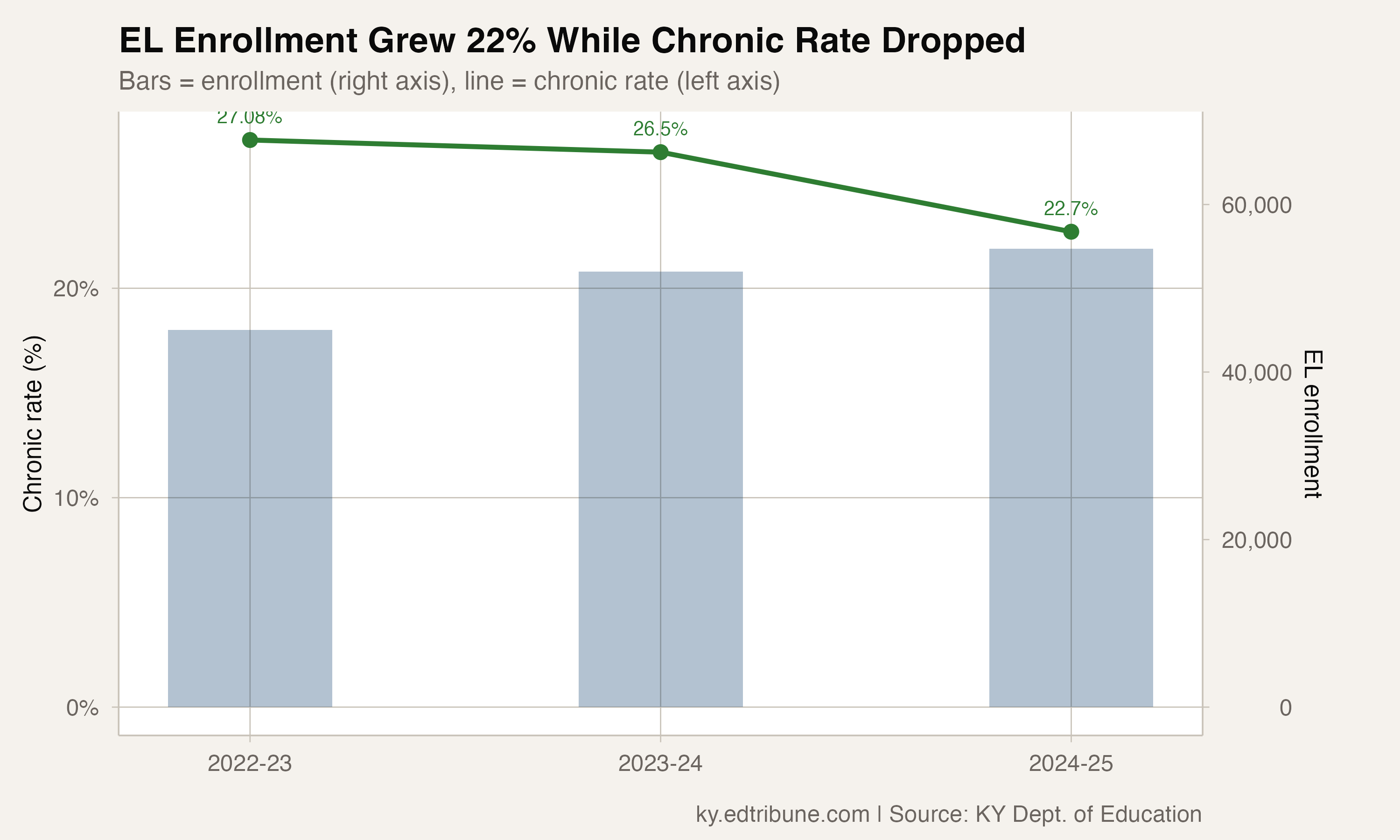
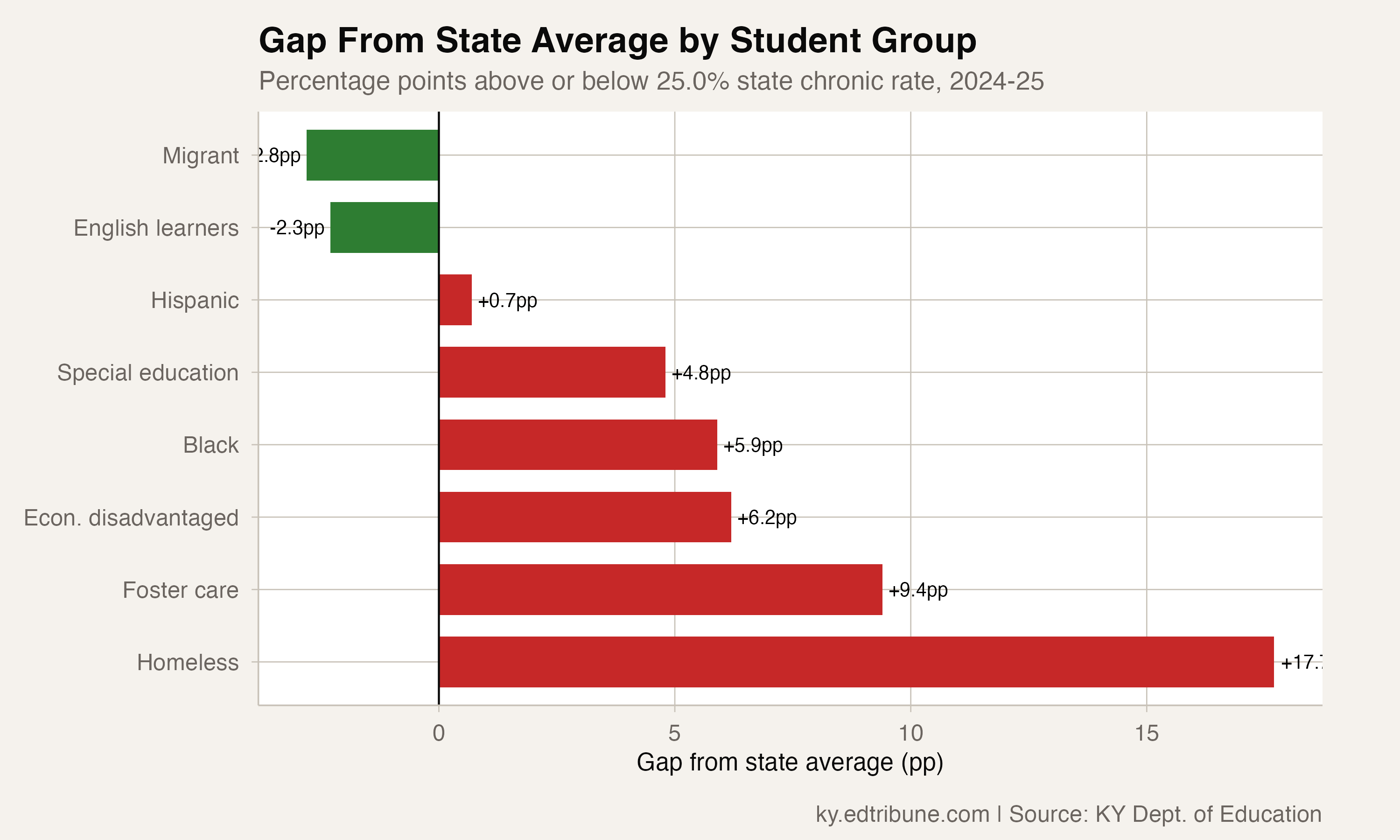
Kentucky's 54,712 English learners have a 22.7% chronic absence rate — below the state average. EL enrollment grew 22% while attendance improved.
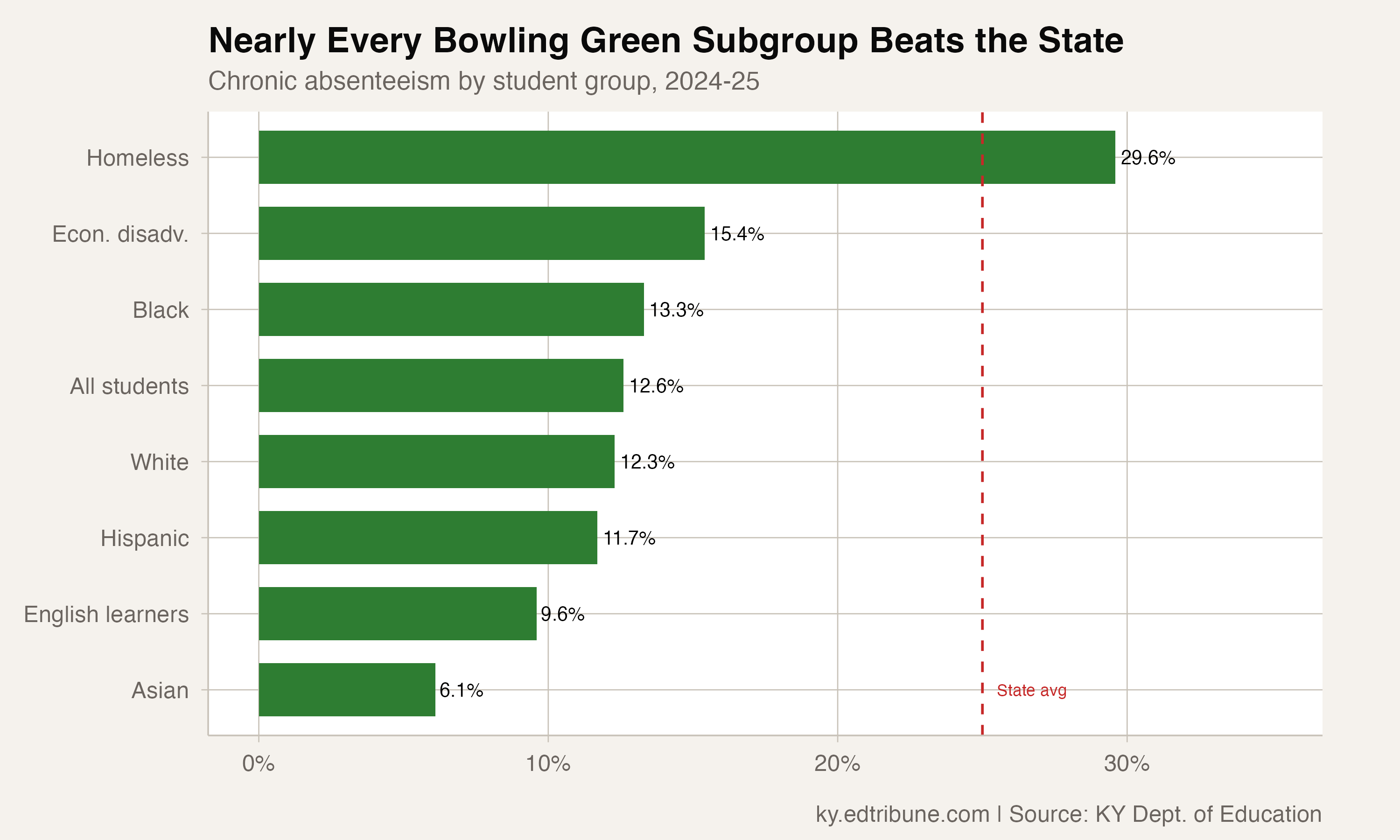
Bowling Green Independent, a diverse refugee-rich district of 5,229, posted a 12.6% chronic rate — less than half Kentucky's 25% average.
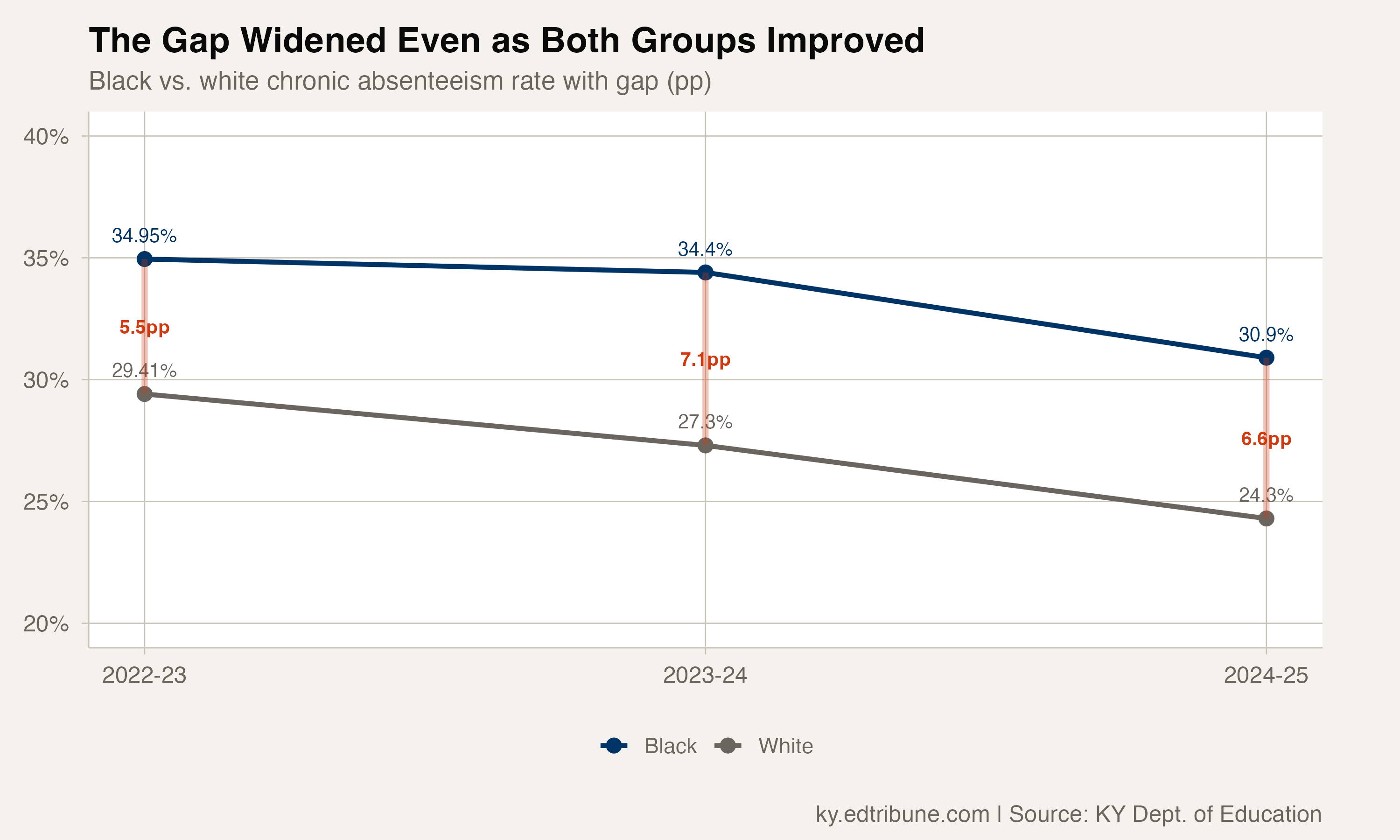
Seven large districts show Black students with lower chronic absenteeism than white students — a reversal of the national pattern that raises questions about what drives racial attendance gaps.
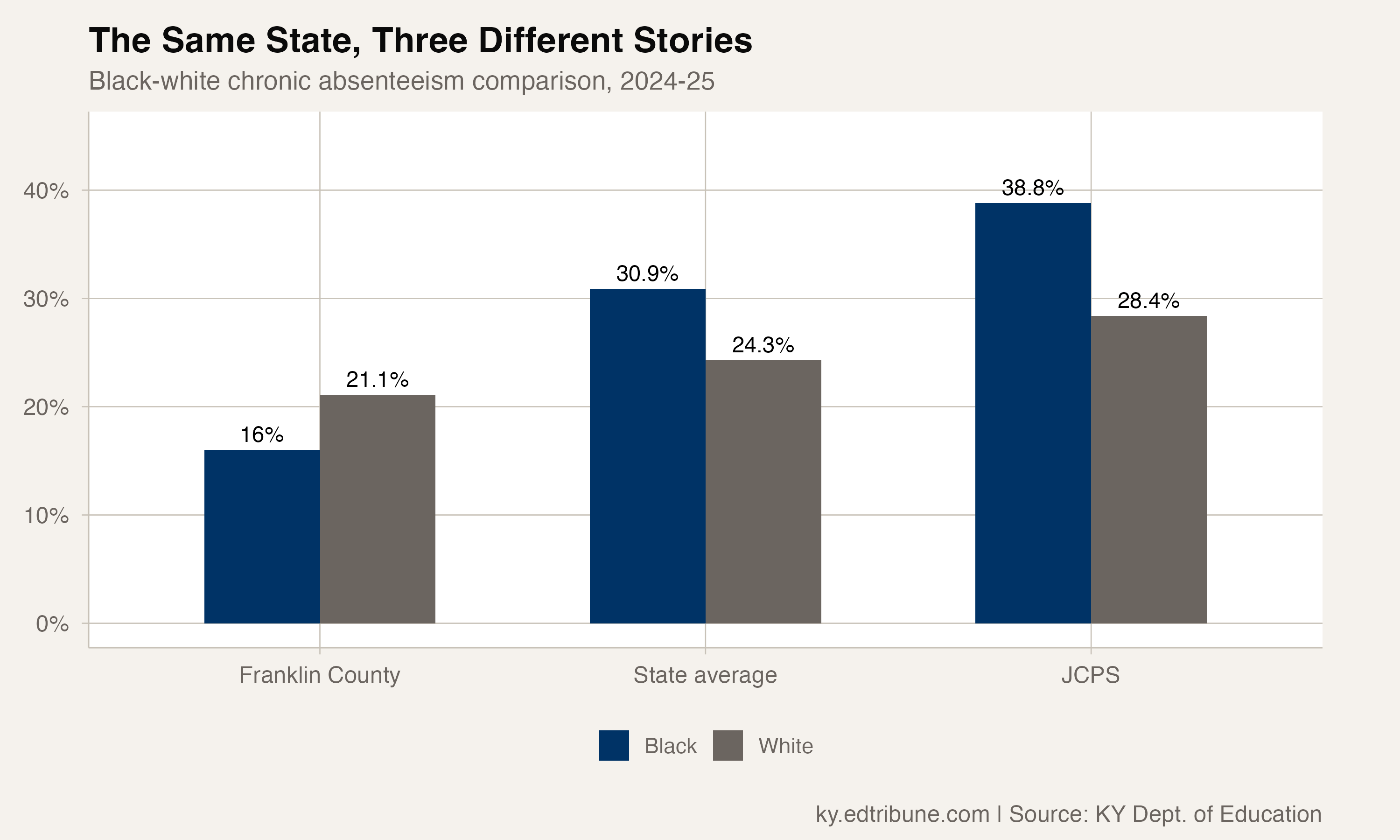
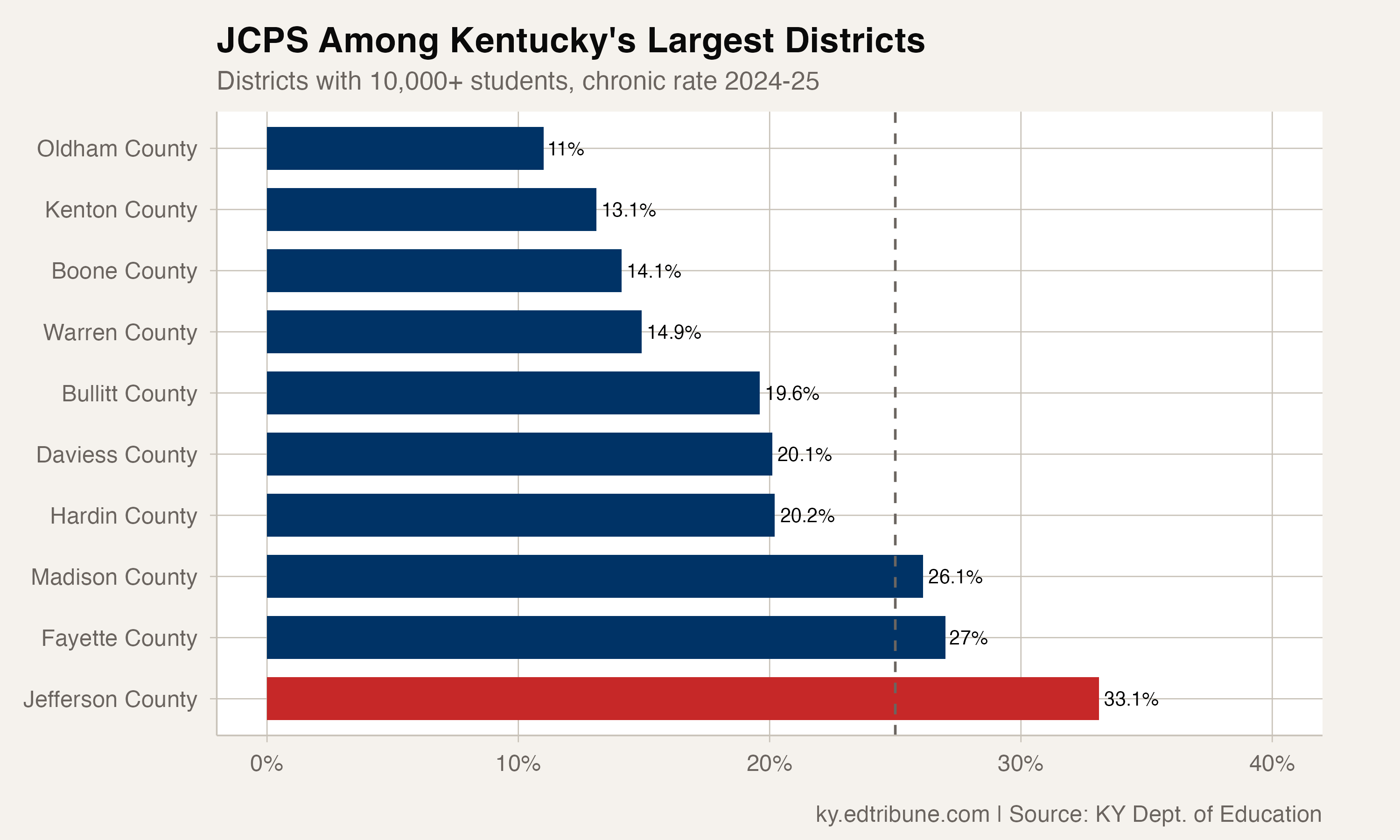
JCPS chronic absenteeism dropped to 33.1% but 32,670 students still miss too much school. The Black-white gap reaches 10.4 points.
Kentucky's 21,832 students who are currently homeless have a 42.7% chronic absence rate. Foster care students barely improved at all.
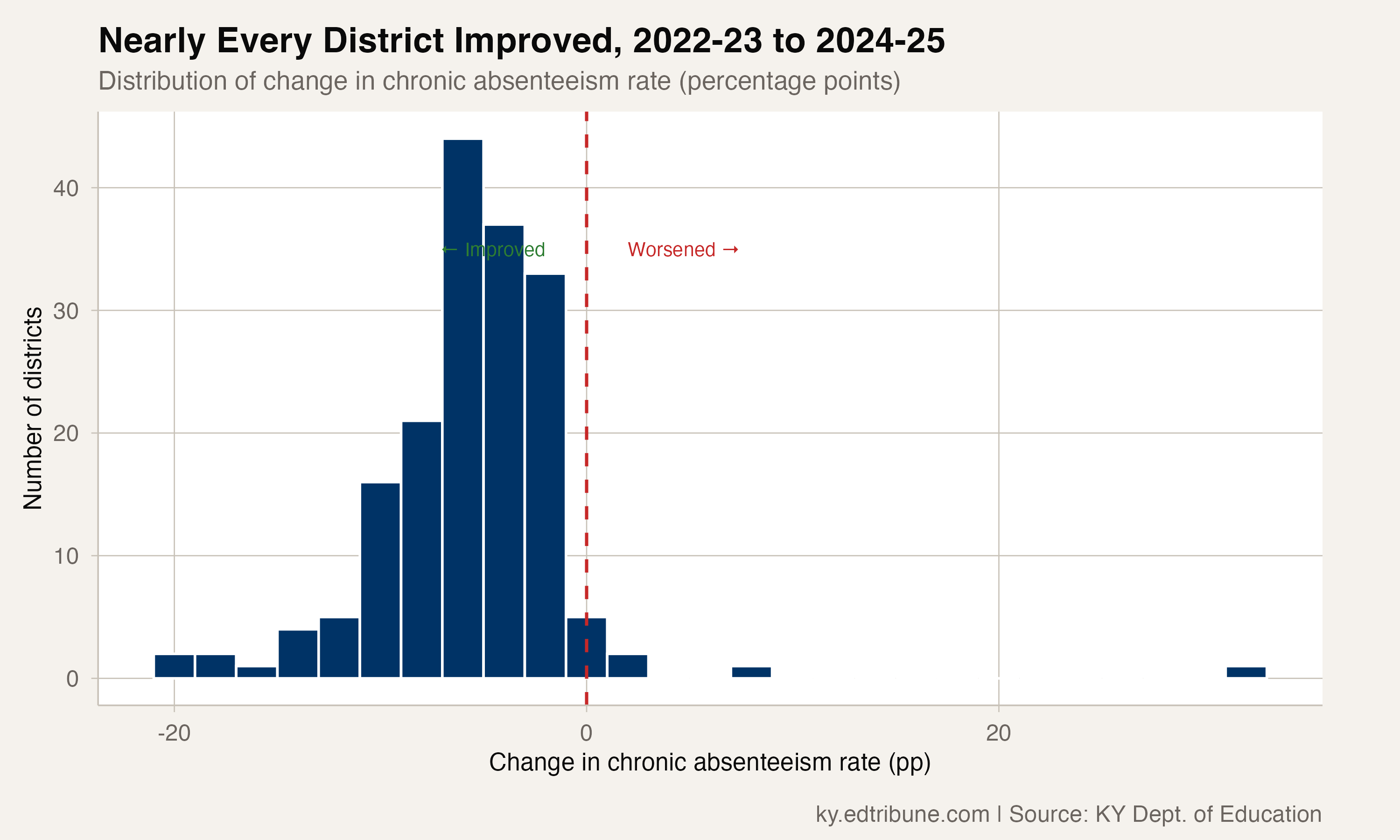
150 of 174 Kentucky districts recorded their lowest chronic absenteeism rate in 2024-25. Only six districts got worse.
Black students improved less than white students on chronic absenteeism, widening the gap from 5.5 to 6.6 points. But 7 districts reversed the pattern entirely.
14 Appalachian districts still exceed 40% chronic absenteeism despite dramatic improvement. Harlan County leads at 51.6%.
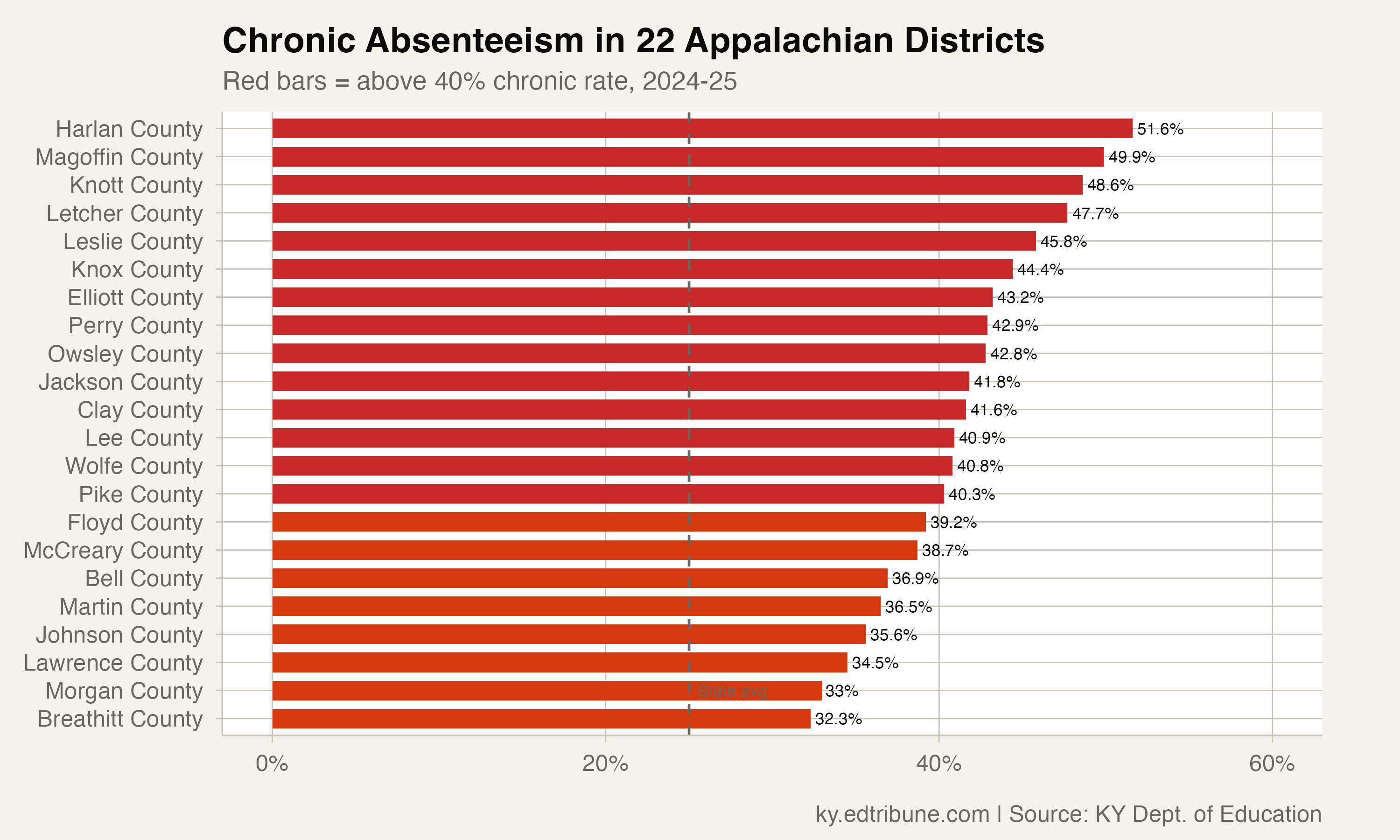
Kentucky's chronic absenteeism dropped from 30% to 25% in two years, but one in four students still misses too much school and the pre-COVID baseline remains distant.
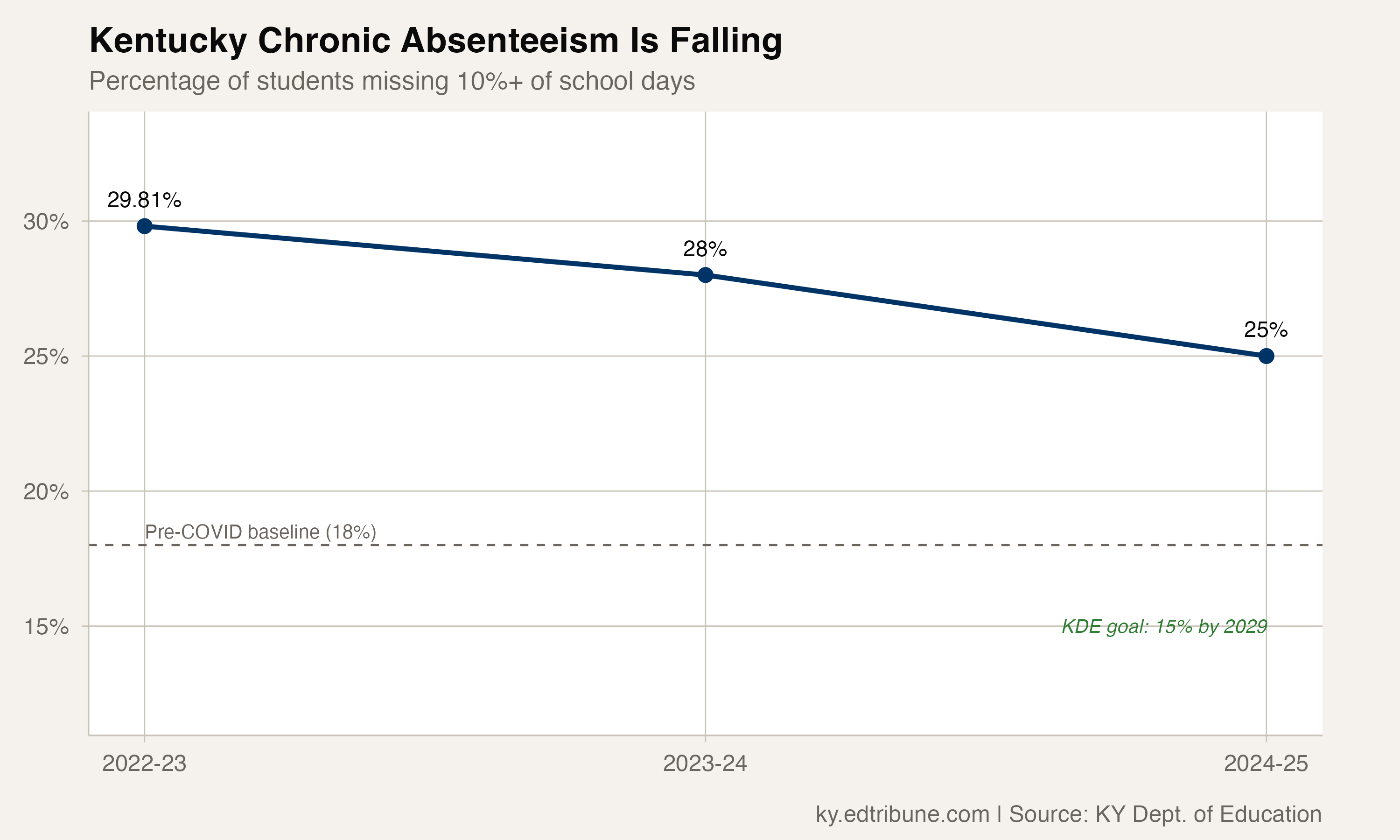
KDE releases 2024-25 chronic absenteeism data showing a 25.0% statewide rate, down nearly 5 points in two years but still 7 points above the pre-COVID baseline.